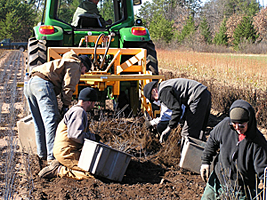
TACLOBAN CITY, Leyte, Nov. 8 (PIA) – The upgrading of the Department of Environment and Natural Resources’ (DENR) old clonal nursery in Babatngon, Leyte, some 33 kilometers north of Tacloban City, into a modern macro-somatic facility is expected to enhance the capability to produce high quality planting materials for the National Greening Program.
DENR-Region 8 Executive Director Rogelio T. Trinidad expressed his gratitude to DENR Secretary Ramon J. Paje for providing the P3.8 Million funds for the upgrading of the Regional Tree Propagation Complex and Training Center.
RED Trinidad said the facility is now equipped with two units of macro-somatic clonal facilities, one unit of recovery facility, hardening beds for cloned seedlings and a hedge garden of different indigenous forest tree species. It also has a laboratory and a conference room capable of accommodating up to 150 people as it doubles as a training center.
“With the renovation, the facility is now capable of producing around 80,000 quality planting materials per year,” Trinidad said.
Showing posts with label Trees. Show all posts
Sunday, November 27, 2011
Wednesday, November 23, 2011
Friday, November 18, 2011
Minnesota state tree nurseries phase out historic seedling program
Willow River, Minn. — Minnesota's two tree nurseries are preparing to phase out much of their seedling production, work they've been doing since the Great Depression.
Although the state nurseries run by the Department of Natural Resources recently celebrated their billionth tree planted, the Legislature directed them to stop selling to private buyers. That worries customers, who fear that private nurseries may not step up to fill the void.
Read full article here: Minnesota state tree nurseries phase out historic seedling program | Minnesota Public Radio News
Thursday, November 17, 2011
i-Tree Software Suite from USDA Forest Service
i-Tree has been used by communities, non-profit organizations, consultants, volunteers, and students to report on the urban forest at all scales from individual trees, parcels, neighborhoods, cities, to entire states. By understanding the local, tangible ecosystem services that trees provide, i-Tree users can link urban forest management activities with environmental quality and community livability. Whether your interest is a single tree or an entire forest, i-Tree provides baseline data that you can use to demonstrate value and set priorities for more effective decision-making.
Developed by USDA Forest Service and numerous cooperators, i-Tree is in the public domain and available by request through the i-Tree website (www.itreetools.org). The Forest Service, Davey Tree Expert Company, National Arbor Day Foundation, Society of Municipal Arborists, International Society of Arboriculture, and Casey Trees have entered into a cooperative partnership to further develop, disseminate and provide technical support for the suite.
Labels:
Benefits,
Forest Service,
i-Tree,
software,
Street,
Trees,
Urban Forest,
USDA
Monday, August 10, 2009
Iron blight and yellow trees may need treatment
Richard Snell, Barton County Extension Agent in Kansas, starts his recent article with a funny anecdotal story of what was called Iron blight when he was a kid (see article).
Richard explains that iron chlorosis occurs on trees, lawns and field crops. "In our area the trees and soybeans get it the worst. It seems to be more obvious when you have good soil moisture and we have had that the last month. My focus today will be on the trees and we will address other chlorotic situations in the coming weeks."
When iron in the soil is either deficient or unavailable to trees, iron chlorosis can occur. In most Kansas soils, iron is plentiful, but unavailable to trees. Iron is readily available to trees growing in soils with a pH of 5.0 to 6.5. In soils with a pH of 7.0 (neutral) and above, iron changes to an insoluble form that is not as available to trees. Many locations in our area have soils with a pH of 7.5 or above and thus are said to be alkaline or sometimes called calcareous or basic.
Read complete article at The Fence Post site>
Richard explains that iron chlorosis occurs on trees, lawns and field crops. "In our area the trees and soybeans get it the worst. It seems to be more obvious when you have good soil moisture and we have had that the last month. My focus today will be on the trees and we will address other chlorotic situations in the coming weeks."
When iron in the soil is either deficient or unavailable to trees, iron chlorosis can occur. In most Kansas soils, iron is plentiful, but unavailable to trees. Iron is readily available to trees growing in soils with a pH of 5.0 to 6.5. In soils with a pH of 7.0 (neutral) and above, iron changes to an insoluble form that is not as available to trees. Many locations in our area have soils with a pH of 7.5 or above and thus are said to be alkaline or sometimes called calcareous or basic.
Read complete article at The Fence Post site>
Labels:
Iron chlorosis,
Soil,
Trees
Organic Carbon Compounds Emitted By Trees Affect Air Quality
A previously unrecognized player in the process by which gases produced by trees and other plants become aerosols—microscopically small particles in the atmosphere—has been discovered by a research team led by scientists at the California Institute of Technology (Caltech).
Their research on the creation and effects of these chemicals, called epoxides, is being featured in the journal Science. A summary of the findings is available at the Science Daily site>
Australian native trees course offered at the Australian Correspondence School
THE AUSTRALIAN Correspondence School (ACS) holds an Australian native trees course, within its plant varieties and horticulture courses.According to ACS, the 100 hour course is designed to identify Australian native trees, in addition to seed propagation and germination.
The course covers the range of uses for Australian native trees, and how to better utilise them for landscape applications and biological control of pests and disease.
ACS says the course includes planting and establishing techniques for the trees, in addition to soils, feeding, watering. Participants will learn tree identification and the general characteristics of Australian native trees.
Source: Landscape Design News>
Friday, July 31, 2009
Identifying fruit tree and ornamental plant varieties using DNA marks
To enable the identification of different varieties and prevent illegal cultivation, a broad range of research and development at the DNA level has been conducted so far.
New varieties of fruit trees and ornamental plants created through painstaking work are being illegally cultivated and marketed at low prices—a serious problem that infringes on breeders’ rights. To enable the identification of different varieties and prevent illegal cultivation, a broad range of research and development at the DNA level has been conducted so far. In the case of fruit trees and ornamental plants propagated by grafting or cuttings, however, no useful method of identification has been established because new varieties and their parents often share the same DNA. Against this background, the DNA marking technique developed by Tomoki Matsuyama, Research Unit Leader in the Plant Breeding and Cell Engineering Research Unit at the RIKEN Advanced Science Institute, is drawing attention as a solution to the recently emerging issues concerning food safety, such as deceptive labeling of production centers.
Read more>
New varieties of fruit trees and ornamental plants created through painstaking work are being illegally cultivated and marketed at low prices—a serious problem that infringes on breeders’ rights. To enable the identification of different varieties and prevent illegal cultivation, a broad range of research and development at the DNA level has been conducted so far. In the case of fruit trees and ornamental plants propagated by grafting or cuttings, however, no useful method of identification has been established because new varieties and their parents often share the same DNA. Against this background, the DNA marking technique developed by Tomoki Matsuyama, Research Unit Leader in the Plant Breeding and Cell Engineering Research Unit at the RIKEN Advanced Science Institute, is drawing attention as a solution to the recently emerging issues concerning food safety, such as deceptive labeling of production centers.
Read more>
Labels:
DNA,
Ornamentals,
Plant Propagation,
Trees
Wednesday, July 29, 2009
Fact Sheet: The Vegie Patch
By Tino Carnevale
It's a typical winter in Tasmania, with frosty mornings, sleet, snow, rain and really cold nights. The deciduous fruit trees are dormant, so it's the perfect time to plant them, transplant them, or give them a good prune.Tino is planting varieties of pear and quince. Most fruit trees need a pollinator. That is, they need a tree of the same type but different variety to pollinate their flowers. Tino has a William 'Bon Chretine' pear to pollinate the Beurre Bosc pear and vice versa. If you have a smaller sized yard, a quince tree is good because they're self-fertile, so you'll only need one tree. Another important thing to consider when selecting a fruit tree is shape or form. The Beurre Bosc Tino's chosen has excellent form and doesn't require much pruning. It's a good goblet shape with three to five laterals, evenly spaced around the main stem. Read more>
Friday, July 24, 2009
Maryland: Grants for tree planting available
If you are wishing there were more trees, but would like a little help with the cost of planting, the state has a couple of programs for you. Officials are offering coupons for individuals and grants to groups:
A state group called The Maryland Urban and Community Forest Committee is now taking grant applications for public land plantings and educational projects. They're handing out awards up to $1,500 to towns, homeowner associations, parks, schools and other groups that plant trees.
Read more
A state group called The Maryland Urban and Community Forest Committee is now taking grant applications for public land plantings and educational projects. They're handing out awards up to $1,500 to towns, homeowner associations, parks, schools and other groups that plant trees.
Read more
Tires Made From Trees: Better, Cheaper, More Fuel Efficient
ScienceDaily (2009-07-21) -- Automobile owners around the world may some day soon be driving on tires that are partly made out of trees -- which could cost less, perform better and save on fuel and energy. ... read full article
Tuesday, July 21, 2009
Artdaily.org - The First Art Newspaper on the Net
| WINSTON-SALEM, NC.- Reynolda House Museum of American Art will host a new exhibition titled "Heroes of Horticulture" July 31 through September 27, 2009 in the museum's Babcock Wing gallery. The exhibition, organized by George Eastman House International Museum of Photography and Film in collaboration with The Cultural Landscape Foundation of Washington, D.C., includes photographs of magnificent trees and plantings, some of which are more than 100 years old. Read more: | |
| Artdaily.org - The First Art Newspaper on the Net Source: artdaily.com | |
Labels:
Exhibit,
photography,
plants,
Trees
Monday, July 6, 2009
Cherry farmer speeds growth
Grower finds way to speed up cherry growthby bill o'brienbobrien@record-eagle.com
(Photo: These special white plastic tunnels cover an acre of dwarf sweet cherry trees at the Dennis Hoxsie's cherry farm and farm market along M-72 in Williamsburg. Douglas Tesner / Record-Eagle)
WILLIAMSBURG -- Something's missing at Dennis Hoxsie's family farm market along M-72.
Oh, there are plenty of Michigan-made foods, snacks, ice cream and other products that draw thousands of visitors and locals over the summer season. But the shelves, at least for another week or so, will remain void of plump, popular sweet cherries from his nearby orchards that customers snap up as soon as they're picked.
Chilly springs such as the '09 season slow the harvest and undercut sales and profits.
So Hoxsie found a way to tweak Mother Nature's confines. He installed a set of three 600-foot
long tunnels at his farm that cover an acre of 500-plus dwarf sweet cherry trees imported from the West Coast.
Because the tunnels create a greenhouse effect that can speed up a crop's development, Hoxsie said heading into National Cherry Festival week without fresh local sweets soon will be a thing of the past.
"What we were looking at is getting cherries ripe earlier in the year, and two, growing a higher quality cherry," Hoxsie said. "We need ripe cherries the first week in July. For me, this is the way to do that."
Because the tunnels create a greenhouse effect that can speed up a crop's development, Hoxsie said heading into National Cherry Festival week without fresh local sweets soon will be a thing of the past.
"What we were looking at is getting cherries ripe earlier in the year, and two, growing a higher quality cherry," Hoxsie said. "We need ripe cherries the first week in July. For me, this is the way to do that."
Tuesday, June 30, 2009
Pawpaws gain standing as Kentucky crop
By Shawntaye Hopkins - shopkins@herald-leader.comWhen Ilze Sillers carried the pawpaws from her small farm in Versailles to the Woodford County Farmers' Market last year, some people — probably city folks — didn't know what they were.
But most people who stopped at the table wanted to share their pawpaw stories. Adults recalled pawpaws eaten as children, pawpaws picked from grandpa's farm and pawpaws stumbled upon in the wild.
"People shared lots of stories, and it brought back a lot of memories for some people," Sillers said.
Sunday, June 28, 2009
Garden Q&A: Help choosing a small flowering tree
Q: I want to plant a small flowering tree in a sunny spot in my garden. There are already dogwoods, cherries, plums and redbuds in my neighborhood. Can you suggest a few spring-blooming alternatives?
A: Even if you are in the mood for something unusual, you don’t have to resort to the exotic. There are several underused American natives that fit your request. They may not match the vividness of familiar Asian species in full bloom, such as the frilly double-flowered Kanzan cherry, but their quiet beauty will draw many admirers. And most will grow no more than 30 feet high, the textbook definition of a small garden tree.
One of the most graceful, Carolina silverbell (Halesia tetraptera), has dangling hoop skirts of pure white flowers followed by lobed fruit. In Dirr’s Hardy Trees and Shrubs: An Illustrated Encyclopedia, Michael Dirr, a woody-plant expert, praises its merits: “The flowers, in a subtle, not boisterous way, are among the most beautiful of all flowering trees.”
Read more:
A: Even if you are in the mood for something unusual, you don’t have to resort to the exotic. There are several underused American natives that fit your request. They may not match the vividness of familiar Asian species in full bloom, such as the frilly double-flowered Kanzan cherry, but their quiet beauty will draw many admirers. And most will grow no more than 30 feet high, the textbook definition of a small garden tree.
One of the most graceful, Carolina silverbell (Halesia tetraptera), has dangling hoop skirts of pure white flowers followed by lobed fruit. In Dirr’s Hardy Trees and Shrubs: An Illustrated Encyclopedia, Michael Dirr, a woody-plant expert, praises its merits: “The flowers, in a subtle, not boisterous way, are among the most beautiful of all flowering trees.”
Read more:
Saturday, June 27, 2009
Weekend Plantings
Several folks have asked me about the beautiful small trees that covered their wispy stems and green-barked branches with yellow blossoms this spring and summer.
Those plants, once extremely common in our landscapes, are Jerusalem thorn trees, native to Mexico, the American Southwest and South America.
Incredibly graceful due to its tiny leaves, this cold-hardy, deciduous tree flowers heavily in spring, and then intermittently through autumn. Although young trees should be staked, the Jerusalem thorn requires little maintenance because established specimens need no irrigation, fertilizer or mulch.
This lovely tree occasionally grows 30 feet tall but is generally smaller.
Jerusalem thorn's diminutive size and airy branching allow it to be used in small gardens where larger or denser trees would be out of place. Additionally, the light shade it casts is ideal for growing most plants.
Install Jerusalem thorn trees on well-drained, sunny sites. They're not resistant to hurricane-force winds, so choose locations carefully. Propagate by seed. Pruning, if necessary, should be done in late autumn.
Read more:
[ Charles Reynolds, a Winter Haven resident, has an associate's degree in horticulture and is a member of the Garden Writers' Association of America. ]
Those plants, once extremely common in our landscapes, are Jerusalem thorn trees, native to Mexico, the American Southwest and South America.
Incredibly graceful due to its tiny leaves, this cold-hardy, deciduous tree flowers heavily in spring, and then intermittently through autumn. Although young trees should be staked, the Jerusalem thorn requires little maintenance because established specimens need no irrigation, fertilizer or mulch.
This lovely tree occasionally grows 30 feet tall but is generally smaller.
Jerusalem thorn's diminutive size and airy branching allow it to be used in small gardens where larger or denser trees would be out of place. Additionally, the light shade it casts is ideal for growing most plants.
Install Jerusalem thorn trees on well-drained, sunny sites. They're not resistant to hurricane-force winds, so choose locations carefully. Propagate by seed. Pruning, if necessary, should be done in late autumn.
Read more:
[ Charles Reynolds, a Winter Haven resident, has an associate's degree in horticulture and is a member of the Garden Writers' Association of America. ]
Labels:
Plant Propagation,
pruning,
Trees
Thursday, June 25, 2009
Free trees and plants for the Denver garden
Jaipi Sixbear
Go to Jaipi's Home Page
Denver Gardening Examiner
Free trees and plants are now available to plant in Denver or any other area. Free trees and plants? You bet! At freetreesandplants.com, free trees and plants are exactly what the customer gets. This enterprising company was established to serve the needs of gardeners, greenhouses and disabled workers.
Free trees and plants are offered to gardeners by freetreesandplants.com. That's right, pay the postage and handling and free trees and plants are sent out, no gimmicks, no up-selling, no hassles. Just choose the free trees and plants, pay the postage and those free trees and plants are on their way.
Read more:
Free trees and plants for the Denver garden
Posted using ShareThis
Go to Jaipi's Home Page
Denver Gardening Examiner
Free trees and plants are now available to plant in Denver or any other area. Free trees and plants? You bet! At freetreesandplants.com, free trees and plants are exactly what the customer gets. This enterprising company was established to serve the needs of gardeners, greenhouses and disabled workers.
Free trees and plants are offered to gardeners by freetreesandplants.com. That's right, pay the postage and handling and free trees and plants are sent out, no gimmicks, no up-selling, no hassles. Just choose the free trees and plants, pay the postage and those free trees and plants are on their way.
Read more:
Free trees and plants for the Denver garden
Posted using ShareThis
Tuesday, June 23, 2009
Many trees turning brown along Tahoe roadways - San Jose Mercury News
The Associated Press
Posted: 06/21/2009 02:47:56 PM PDT
INCLINE VILLAGE, Nev.—Many trees are turning brown along roadways in the Lake Tahoe basin, and experts think it's because of a combination of drought and road salt.
Thor Dyson of the Nevada Department of Transportation says the lingering drought and the winter use of salt have taken a toll on trees along roadways such as State Route 28.
Read more:
Many trees turning brown along Tahoe roadways - San Jose Mercury News
Shared via AddThis
Posted: 06/21/2009 02:47:56 PM PDT
INCLINE VILLAGE, Nev.—Many trees are turning brown along roadways in the Lake Tahoe basin, and experts think it's because of a combination of drought and road salt.
Thor Dyson of the Nevada Department of Transportation says the lingering drought and the winter use of salt have taken a toll on trees along roadways such as State Route 28.
Read more:
Many trees turning brown along Tahoe roadways - San Jose Mercury News
Shared via AddThis
Monday, June 22, 2009
Pruning starts tree off right | PoconoRecord.com
By LEE REICH
For The Associated Press
June 20, 2009
So you planted trees this spring. Those trees' first years in the ground — and especially this very first year — are important to their future strength and beauty.
Pruning is one way to direct development of what will become their permanent limbs, and the best time for this pruning is while the trees are still small. Small cuts made on small trees leave correspondingly small wounds.
PROMOTE THE TOP DOG: Help your young tree to develop a sturdy trunk. For most trees,
this means allowing only a single stem to be the main axis. Let this stem be the most vertical, strongest one. Shorten, cut away or bend down any other stems competing for the role of top dog.
Read more:
Pruning starts tree off right PoconoRecord.com
Shared via AddThis
For The Associated Press
June 20, 2009
So you planted trees this spring. Those trees' first years in the ground — and especially this very first year — are important to their future strength and beauty.
Pruning is one way to direct development of what will become their permanent limbs, and the best time for this pruning is while the trees are still small. Small cuts made on small trees leave correspondingly small wounds.
PROMOTE THE TOP DOG: Help your young tree to develop a sturdy trunk. For most trees,
this means allowing only a single stem to be the main axis. Let this stem be the most vertical, strongest one. Shorten, cut away or bend down any other stems competing for the role of top dog.
Read more:
Pruning starts tree off right PoconoRecord.com
Shared via AddThis
Brazil to pay Amazon small farmers to plant trees
* Move may help stave off global pressure
* Lula says it's time to change deforestation habits
* 'We want to be reasonable'
By Stuart Grudgings and Brian Ellsworth
BRASILIA, June 19
(Reuters) - Brazil will pay small farmers to plant trees in deforested Amazon areas to slow rain forest degradation, President Luiz Inacio Lula da Silva said on Friday as he unveiled a broad plan to protect the region.
The effort may help stave off growing international pressure on Brazil to reduce deforestation that scientists say spurs global warming, providing alternative livelihoods to poor Amazon dwellers who live off timber exploitation.
"We need to think about how to make those people feel that they will make more money by planting trees than by cutting them down," Lula said in an interview after a ceremony to inaugurate the "Green Arch" program to protect the Amazon.
Read more:
* Lula says it's time to change deforestation habits
* 'We want to be reasonable'
By Stuart Grudgings and Brian Ellsworth
BRASILIA, June 19
(Reuters) - Brazil will pay small farmers to plant trees in deforested Amazon areas to slow rain forest degradation, President Luiz Inacio Lula da Silva said on Friday as he unveiled a broad plan to protect the region.
The effort may help stave off growing international pressure on Brazil to reduce deforestation that scientists say spurs global warming, providing alternative livelihoods to poor Amazon dwellers who live off timber exploitation.
"We need to think about how to make those people feel that they will make more money by planting trees than by cutting them down," Lula said in an interview after a ceremony to inaugurate the "Green Arch" program to protect the Amazon.
Read more:
Subscribe to:
Posts (Atom)