2011 Holiday Gift Ideas

Showing posts with label Profile. Show all posts

Wednesday, December 21, 2011

Park in Profile: Golden Gate Park, San Francisco

Measuring more than 1,000 acres, the Golden Gate Park has stood as a symbol of natural beauty, easily earning the title as one of the most visited city parks in all of America. As San Franciscans turned their attention to the happenings of New York City’s Central Park, residents began to yearn for their own scenic community dwelling. Today, although similar in shape, Golden Gate Park possesses an array of unique and one-of a-kind features that sets it apart from other urban settings.

During the 1860s, plans were put into motion to transform the bleak sand and shore dunes that decorated San Francisco into a usable, inviting park for the all to enjoy. In 1870, a field engineer named William Hammond Hill organized a survey and developed a topographic map that would serve as the blueprint for the new park site. One year later, he was deemed commissioner of the project. At first, the park plans were met with natural opposition as engineers attempted to sketch a course of action that would add traverse roadways throughout the park. The positioning of gems, such as the Concourse and the Arboretum, made this difficult to achieve.

Read more: Golden Gate Park History

Link to the park's website: Golden Gate Park Homepage


Wednesday, December 14, 2011

Park in Profile: Singapore Botanic Gardens

The Gardens at its present site was founded in 1859 by an Agri-Horticultural Society. Planned as a leisure garden and ornamental park, the Society organised flower shows and horticultural fetes. In 1874, the Society handed over management and maintenance of the site to the government. The scientific mission of the Gardens evolved when the colonial government assumed management and deployed Kew-trained botanists and horticulturists to administer the Gardens.

It is fair to say that the history of the Gardens is in many respects the history of its dedicated administrators. The Gardens' first Director, Henry Nicholas Ridley, came to the Gardens in 1888 and worked tirelessly for the next 23 years to usher the Gardens into the twentieth century and its most productive period historically. Ridley's zealous persistence in persuading Malaya's planters to grow rubber trees earned him less than flattering nicknames such as "Mad Ridley" and "Rubber Ridley". During the 1890s and early 1900s, Ridley devised successful propagation methods and also discovered a way to harvest commercial quantities of latex without harming or killing the trees. He advocated the large-scale cultivation of rubber in Malaya. Planters in Malaya largely ignored Ridley until their coffee plantations were devastated by disease and they desperately required a new cash crop.

During this time, demand for rubber soared as the automobile industry boomed. As Ridley had turned the Gardens forest clearings and waste land over to rubber, the Gardens had a ready source of seed supply when the rubber rush came. The Gardens' revenue multiplied greatly as the region became a major market for the rubber trade. The plants at the Botanic Gardens became the basis for Southeast Asia's rubber industry, an industry that generated fortunes.

Read more of park's history: http://www.sbg.org.sg/aboutus/ourhistory.asp

General Information

Address: Singapore Botanic Gardens
               1 Cluny Road
               Singapore 259569


Tel:         (65) 6471 7138 / (65) 6471 7361
Fax:        (65) 6473 7983
E-mail:    NPARKS_SBG_Visitor_Services@NPARKS.GOV.SG 


Link to garden's homepage: http://www.sbg.org.sg/


Wednesday, December 7, 2011

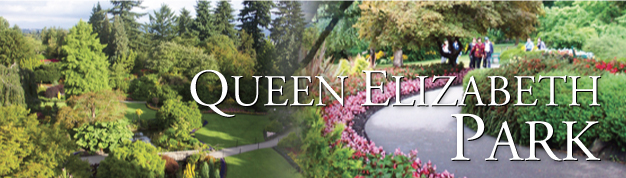
Park in Profile: Queen Elizabeth Park, Vancouver, BC

Vancouver's Horticultural Jewel! Queen Elizabeth Park is the second most visited park in Vancouver and holds within its perimeters some of the most beautiful public gardens anywhere. Its recreational offerings are diverse ranging from sporty to horticultural and include golf, tennis, lawn bowling, disc golf, an extensive outdoor arboretum and the indoor Bloedel Floral Conservatory.

The seasonally changing and beautifully planted Quarry Gardens astound residents and tourists alike as viewed from the park's upper reaches or from the bottom looking up. Expertly positioned, select ornamental trees and shrubs make this Vancouver's horticultural jewel located practically city-center.

Location:     Off 33rd Avenue between Cambie and Main Streets, Vancouver, British Columbia, Canada

Wednesday, November 16, 2011

Plant Classification - Kniphofia uvaria


Plant profile sheet: Kniphofia uvaria

Plant Classification:
Kniphofia uvaria (L.) Oken
Click on a scientific name below to expand it in the PLANTS Classification Report.
KingdomPlantae – Plants
SubkingdomTracheobionta – Vascular plants
SuperdivisionSpermatophyta – Seed plants
DivisionMagnoliophyta – Flowering plants
ClassLiliopsida – Monocotyledons
SubclassLiliidae
OrderLiliales
FamilyLiliaceae – Lily family
GenusKniphofia Moench – redhot poker
SpeciesKniphofia uvaria (L.) Oken – redhot poker

Friday, July 31, 2009

Profile: Luthur Burbank

Luther Burbank
From Wikipedia, the free encyclopedia

Born: 7 March 1849 (1849-03-07) Lancaster, Massachusetts, USA
Died: 11 April 1926 (aged 77) Santa Rosa, California, USA
Fields: Botany

Luther Burbank (7 March 1849 – 11 April 1926) [1] was an American botanist, horticulturist and a pioneer in agricultural science.

He developed more than 800 strains and varieties of plants over his 55-year career. Burbank's varied creations included fruits, flowers, grains, grasses, and vegetables. He developed a spineless cactus (useful for cattle-feed) and the plumcot.

Burbank's most successful strains and varieties include the Shasta daisy, the Fire poppy, the July Elberta peach, the Santa Rosa plum, the Flaming Gold nectarine, the Wickson plum, the Freestone peach, and the white blackberry. A natural genetic variant of the Burbank potato with russet-colored skin later became known as the Russet Burbank potato. This large, brown-skinned, white-fleshed potato has become the world's predominant potato in food processing.

Read more from Wikipedia>

Wednesday, July 8, 2009

Profile: Jagadish Chandra Bose a plant physiologist

Sohoni Das
Go to Sohoni's Home Page
SF Hindu Examiner

Jagadish Chandra Bose was a physicist, biologist, botanist and a pioneer in the field of radio and microwave optics and made very significant contributions to plant physiology. He was able to show the similarities between the behavioral response of plant and animal tissue. He had laid the foundations of experimental science in the Indian Subcontinent. Born in Mymensingh, Bengal (Eastern India and now Bangladesh) during the colonial rule in India, graduated from St Xavier’s College, Calcutta, and joined Presidency College of University of Calcutta as a Professor of Physics. He retired and then founded the Bose Research Institute, the first scientific research institute in India.

Tuesday, June 30, 2009

Man of will planted seeds of success in North Dakota | INFORUM | Fargo, ND

Rarely does a father-son combination excel in different fields at the community, state and national level. Because of the contributions made by Oscar Will and his son George, North Dakota is richer in the areas of agriculture, education, history and anthropology.

By: Curtis Eriksmoen, INFORUM

Rarely does a father-son combination excel in different fields at the community, state and national level. Because of the contributions made by Oscar Will and his son George, North Dakota is richer in the areas of agriculture, education, history and anthropology.

The seed business established by Oscar Will used crops harvested by Native Americans to enrich the varieties of hardy grains and vegetables grown in the Upper Great Plains. His work in education was rewarded by having a school named after him.

George Will continued to expand the seed business and was also active in turning out more than 100 works on anthropology, history and horticulture. He also translated important historical works into English.

Read more:

Man of will planted seeds of success in North Dakota INFORUM Fargo, ND
Source: inforum.com

lhc sent this using ShareThis.

Friday, June 19, 2009

Public Horticulture Career Profile: Mary Pat Matheson

Profile - Carl Linnaeus

Carl Linnaeus
From Wikipedia, the free encyclopedia
(Redirected from Carolus Linnaeus)

Carl Linnaeus (Carl von Linné)

Carl von Linné, Alexander Roslin, 1775. Currently owned by and displayed at the Royal Swedish Academy of Sciences.

Born : May 13, 1707(1707-05-13) (seearticle note:[1])Råshult, Älmhult, Sweden
Died : January 10, 1778 (aged 70)Uppsala, Sweden
Residence : Sweden
Nationality : Swedish
Fields : Zoology, Medicine, Botany
Alma mater : Lund UniversityUppsala UniversityUniversity of Harderwijk

Known for TaxonomyEcologyBotany
Author abbreviation (botany) -L.
Religious stance : Church of Sweden
Signature Notes: Linnaeus adopted the name Carl von Linné after his 1761 ennoblement awarded him the title von. He is the father of Carolus Linnaeus the Younger.

Carl Linnaeus (Latinized as Carolus Linnaeus, also known after his ennoblement as Carl von Linné (help·info), May 23 [O.S. May 13] 1707 – January 10, 1778) was a Swedish botanist, physician, and zoologist, who laid the foundations for the modern scheme of binomial nomenclature. He is known as the father of modern taxonomy, and is also considered one of the fathers of modern ecology.

Linnaeus was born in the countryside of Småland, in southern Sweden. His father was the first in his ancestry to adopt a permanent last name; prior to that, ancestors had used the patronymic naming system of Scandinavian countries. His father adopted the Latin-form name Linnaeus after a giant linden tree on the family homestead. Linnaeus got most of his higher education at Uppsala University and began giving lectures of botany there in 1730. He lived abroad between 1735–1738, where he studied and also published a first edition of his Systema Naturae in the Netherlands. He then returned to Sweden where he became professor of botany at Uppsala. In the 1740s, he was sent on several journeys through Sweden to find and classify plants and animals. In the 1750s and 60s, he continued to collect and classify animals, plants, and minerals, and published several volumes. At the time of his death, he was widely renowned throughout Europe as one of the most acclaimed scientists of the time.

The Swiss philosopher Jean-Jacques Rousseau sent him the message: "Tell him I know no greater man on earth."[2] The German writer Johann Wolfgang von Goethe wrote: "With the exception of Shakespeare and Spinoza, I know no one among the no longer living who has influenced me more strongly."[2] Swedish author August Strindberg wrote: "Linnaeus was in reality a poet who happened to become a naturalist".[3]

In botany, the author abbreviation used to indicate Linnaeus as the authority for species names is simply L.

More from Wikipedia

Other resources on C. Linnaeus

Thursday, June 18, 2009

Profile: Frederick Law Olmsted

From Wikipedia, the free encyclopedia

Frederick Law Olmsted (April 26, 1822 – August 28, 1903) was an American journalist, landscape designer and father of American landscape architecture, famous for designing many well-known urban parks, including Central Park and Prospect Park in New York City.[2] Other projects include the country's oldest coordinated system of public parks and parkways in Buffalo, New York; the country's oldest state park, the Niagara Reservation in Niagara Falls, New York; Mount Royal Park in Montreal in Canada; the Emerald Necklace in Boston, Massachusetts; the Belle Isle Park, in Detroit, Michigan; the Presque Isle Park in Marquette, Michigan; the Marquette Park in Chicago; the Grand Necklace of Parks in Milwaukee, Wisconsin; the Cherokee Park and entire parks and parkway system in Louisville, Kentucky; Jackson Park, Washington Park, and the Midway Plaisance in Chicago for the World's Columbian Exposition; the landscape surrounding the United States Capitol building; George Washington Vanderbilt II's Biltmore Estate in Asheville; and Montebello Park in St. Catharines, Ontario, Canada.


Read more from Wikipedia:


Life:


Accomplishments:

Other resources on F.L. Olmsted